

Every dispatcher knows the sinking feeling of sending a driver out to a call only to realize the casualty vehicle is heavier than reported. Sending an underpowered truck to a heavy-duty scene creates immediate safety hazards and opens your business up to massive liability.
You need to know exactly where the line stands between medium-duty work and true heavy-duty recovery.
Defining these categories accurately prevents equipment damage and keeps your drivers safe. It also helps you bid on the right municipal contracts and insurance rotations. If you operate in the grey area between classes without clear definitions, you risk fines from the DOT and costly repairs on your own fleet.

Heavy Metal for the Heaviest Jobs
Twin Cities Wrecker Sales specializes in the kind of iron that moves the world.
We understand that heavy-duty towing requires more than just a strong chassis. It demands a perfect marriage between the truck body and the recovery equipment. Our team helps you navigate the complex specifications of axle ratings and boom capacities. We ensure you drive away with a unit that legally and physically handles the loads you intend to haul.
We match you with equipment that withstands the extreme stress of uprighting loaded tractor-trailers and recovering heavy machinery.
Customize Your Heavy-Duty Tow Truck
Speak with our sales experts to build a heavy-duty unit that fits your needs.
Time For Maintenance?
Schedule service for your heavy-duty wreckers to keep them DOT compliant and ready for whatever the road brings them.
The Defining Characteristics of Heavy-Duty Tow Trucks
You can usually identify a heavy-duty tower by three main factors.
Gross Vehicle Weight Rating (GVWR)
The most technical definition starts with the chassis.
Class 8 trucks define the heavy-duty sector. These vehicles have a GVWR exceeding 33,000 pounds. You will almost always see tandem or tri-axle setups on these units to distribute the massive weight of the wrecker body and the casualty vehicle. If the truck requires a Class A or B CDL to operate, you are likely in heavy-duty territory.
Boom and Underlift Capacity
The towing equipment itself separates the medium-duty trucks from the heavy hitters.
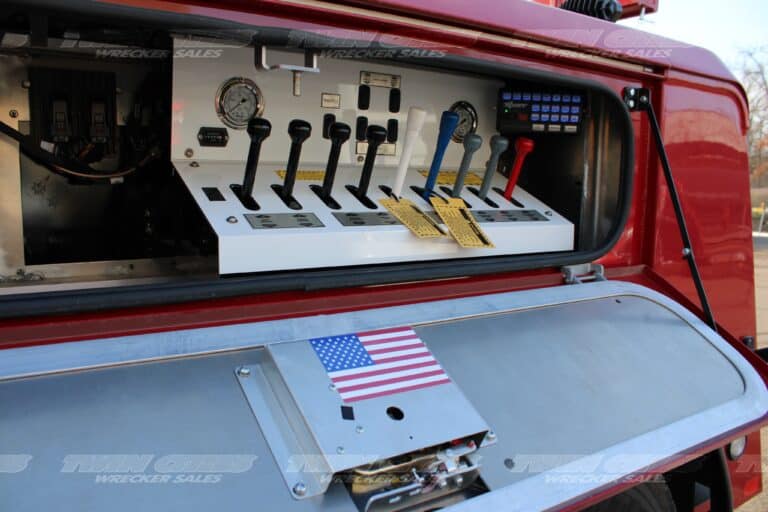
A true heavy-duty wrecker typically starts with a 25-ton boom rating and goes up from there. We see units ranging from 35-ton integrated wreckers all the way up to 100-ton rotators. The underlift must be capable of lifting the front or rear axles of a fully loaded semi-truck without the front steer tires of the tow truck leaving the pavement.
The Application
You define the truck by the work it performs.
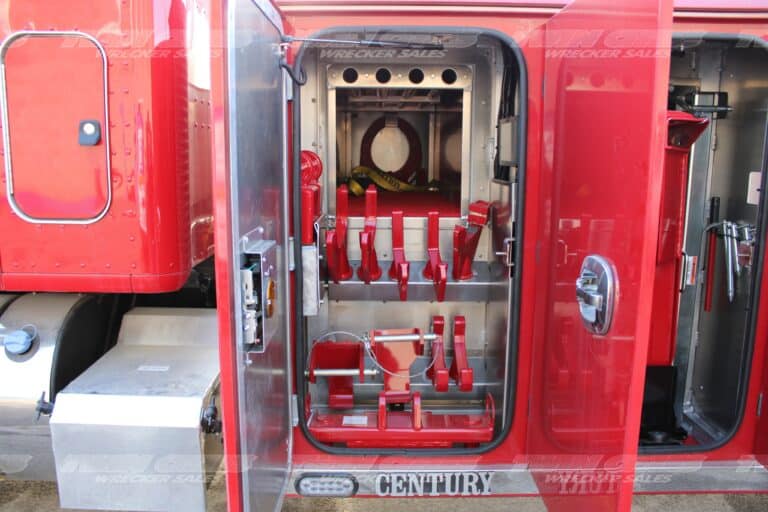
Heavy-duty trucks handle 18-wheelers, cement mixers, tour buses, and garbage trucks. These units use air brakes exclusively and often carry specialized recovery gear like snatch blocks and cribbing that light-duty trucks never need. If the job involves uprighting a rolled-over tanker on the interstate, that is a heavy-duty job requiring a heavy-duty truck.
Step Up to the Big Leagues
Minnesota winters demand respect, but they don’t have to create constant anxiety about crew safety and operational capability. When your fleet carries properly designed winter safety kits, you operate with confidence knowing you’re prepared for whatever conditions develop.
Adding a heavy-duty wrecker to your fleet changes the trajectory of your business.
You stop chasing small impounds and start handling high-revenue commercial calls.
You become the company the police call when a semi blocks the highway.
Review your current capabilities. If you find yourself turning down lucrative commercial towing contracts because you lack the equipment, the time has come to upgrade. Visit Twin Cities Wrecker Sales to find the heavy-duty solution that puts you at the top of the rotation list.
Winter safety isn’t about surviving the season—it’s about thriving despite challenging conditions while keeping everyone safe and productive.